
Reline vs. Repair: How to Choose the Right Strategy for Failing Geosynthetic Liners
Geosynthetic liners are critical to the performance and compliance of containment systems in oilfield, power generation, mining, landfill, agriculture, and other industrial industries. When a liner begins to leak, tear, or show signs of aging, operators face an important decision: repair the damaged areas or reline the entire containment system.
What Causes Geosynthetic Liners to Fail?
Geosynthetic liners are engineered barrier systems used to contain liquids, slurries, solids, and waste materials in applications such as produced water pits, brine ponds, leachate ponds, wastewater lagoons, fresh water storage, and tailings containment. Because these systems most often operate in harsh environments, liner performance depends not only on the material but also on design details such as anchoring, subgrade preparation, and protective layers.
Geosynthetic liner failures typically stem from a combination of mechanical damage, environmental exposure, and aging, including:
- Punctures or tears from equipment, wildlife, or sharp subgrade
- Seam separation or welding defects
- UV degradation, oxidation, or thermal cycling
- Fire events or extreme temperatures
- Settlement, erosion, or anchor trench failure
- Slipping or trampolining
Understanding the root cause of the failure is essential when deciding whether to repair or reline – localized damage often supports repair, while systemic deterioration usually points toward relining.
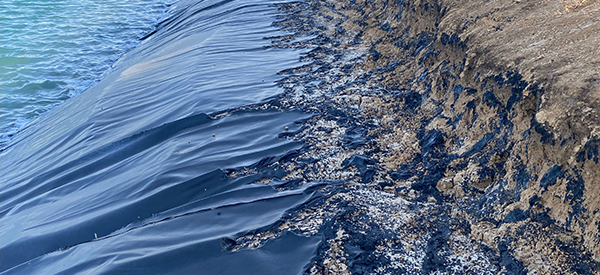
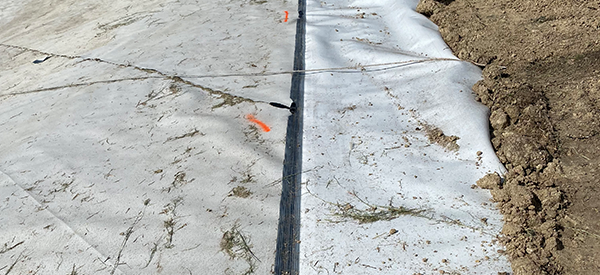
How to Evaluate a Damaged HDPE Liner
Before deciding whether to repair or reline, operators need a clear understanding of why the geosynthetic liner failed, how extensive the damage is, and whether the existing system can continue to perform safely and reliably. A structured evaluation helps determine whether the liner is still a viable asset or whether it has reached the point where continued patching creates more risk than value. A comprehensive HDPE liner assessment typically includes:
- Material condition: type, thickness, age, flexibility, and UV exposure
- Extent of damage: isolated punctures vs. widespread leaks or brittle areas
- Subgrade and trench stability: settlement, erosion, or pullout
- Operational factors: chemical exposure, temperature, fluid characteristics, and regulatory risk
When Repair Is the Right Choice for Your Geosynthetic Liner
Repair is an efficient solution when the HDPE liner is fundamentally sound and damage is isolated. Repair works well when:
- Damage is limited to small punctures, tears, or single seam defects
- The liner shows no signs of global brittleness or oxidation
- Anchor trenches and the subgrade remain stable
- The containment is low-to-moderate risk and leaks can be managed quickly
Common reasons to choose geosynthetic liner repair:
- A single puncture in an otherwise healthy HDPE liner
- Localized wildlife or equipment damage
- Early detection of a small seam split
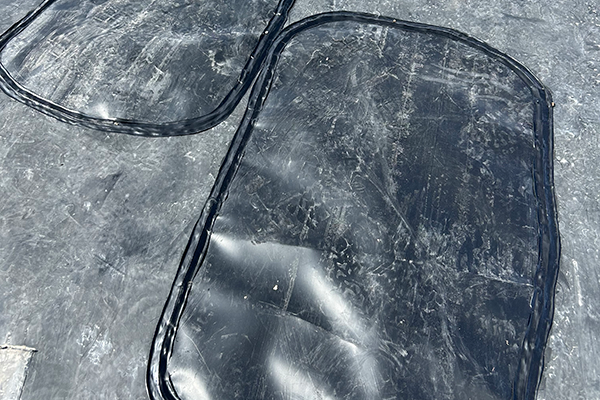
Typical liner repair techniques
Depending on material type and site conditions, common repair methods include:
- Hot‑air welding for small tears, pinholes, and localized seam defects
- Extrusion welding for thicker liner, larger patches, and detail work
- Surface patching and mechanical fastening systems when weather or access temporarily limit welding
For repairs to be durable, focus on the four fundamentals: clean and dry surfaces, compatible liner and patch materials, correct weld preparation and procedures, and safe access to each defect area.
When Relining Is the Better Long-Term Strategy
A full reline becomes a better option when the existing containment system has reached the end of its useful life or when ongoing failures create unacceptable risk. Relining is recommended when:
- Damages are widespread or recurring across multiple areas
- The liner shows UV cracking, oxidation, or stiffness beyond repair
- Anchor trenches, slopes, or subgrade issues cannot be mitigated with patching
- The site has high environmental or regulatory consequences for leaks
- The cost and frequency of repairs approach the cost of replacement
Common reasons to choose reline:
- Multiple seam failures across older panels
- Broad UV cracking or embrittlement on slopes
- Chronic anchor trench pullout
- Repurposing a pit for long-term or higher-risk service
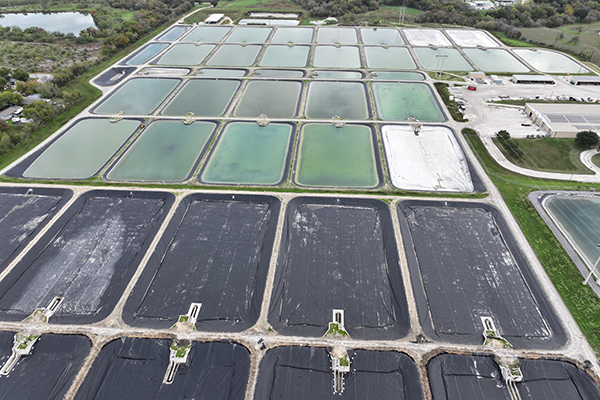
A new liner—paired with improved subgrade preparation and anchoring—often reduces long-term cost and operational uncertainty.
Repair vs. Reline: Decision Framework
Determine whether geosynthetic liner repair or reline best aligns with risk, cost, and your performance goals. While every containment system behaves differently in the field, most decisions come down to the same core factors: how widespread the damage is, how much useful life remains in the liner, and whether the system can continue operating safely with targeted repairs. Because many failure mechanisms are not fully visible from the surface, a site inspection from a Mustang Extreme technician is essential to accurately assess liner condition, subgrade stability, anchoring performance, and overall system risk. The framework below provides a clear, side-by-side guide to support your repair vs reline decision making process.
| Factor | What to Evaluate | Repair | Reline |
|---|---|---|---|
| Leak serverity & frequency | Size, number, and location of leaks; recurrence over time | Small, isolated leaks with stable conditions | Multiple or recurring leaks across the system |
| Line & substrate condition | Age, flexibility, UV degradation, stress cracking, seam integrity, subgrade stability | Localized damage, otherwise healthy liner and firm subgrade | Widespread degradation, brittle liner, or unstable subgrade |
| Anchoring & trenching | Trench depth, width, setback, backfill quality, pullout or settlement signs | Sound anchor trenches with no pullout or erosion | Systemic anchor issues or settlement driving repeated failures |
| Environmental & operational exposure | Exposed vs. covered, thermal cycling, wind, traffic, wildlife and fire exposure | Low-stress, covered, or sheltered environments | High-stress exposure or recurring wildlife/fire damage |
| Cost, downtime & schedule | Budget, outage windows, cost of repeat repairs and unplanned leaks | Tight outage windows and minor, well-bounded damage | Long-term reliability and cost control prioritized |
| Regulatory & risk tolerance | Environmental sensitivity, regulatory requirements, corporate risk posture | Short-term or low-consequence containment | High-consequence, highly regulated, or zer0-tolerance sites |
Reducing Future Geosynthetic Liner Repair or Reline Needs
Regardless of which option you choose, preventive maintenance greatly extends liner life. These measures help ensure long-term containment performance and reduce emergency repair costs.
- Routine inspections—especially after storms or heavy equipment use
- Leak detection systems to catch small issues early
- Documentation of all repairs and material compatibility
- Protective measures such as geotextile cushioning, ballast, and vegetation control
- Fire-prevention and wildlife-mitigation (fences, bird netting) around exposed liner surfaces
How Mustang Extreme Supports Geosynthetic Liner Repair and Reline Decisions
Mustang Extreme provides full-scope assessment, repair, and relining services, including:
- Geosynthetic liner inspections and leak investigations
- Emergency repair mobilizations
- Complete liner replacement and installation
- Subgrade stabilization, anchoring, and protective geotextile systems
Whether you’re dealing with an isolated puncture or a liner nearing the end of its service life, Mustang Extreme can help you determine the most cost-effective and reliable path forward. If you’d like an expert evaluation, a repair quote, or guidance on planning a full reline, our team is ready to support your next steps on your timeline and tailored to your site conditions. Contact us for more information.
Experience Built by the Billions
With over 1.72 billion square feet of liner installed, Mustang Extreme Environmental Services is one of the most experienced and capable environmental lining companies in the business. We excel in the installation of systems for upstream and midstream oil and gas, coal ash, solid waste landfill, mining, and agricultural applications. Our significant buying power and commitment to reinvestment in our inventory makes it possible for us to consistently meet our customers’ requirements and deploy material faster than our competitors.
Materials Installed
- 20, 30, 40, 60, 80 and 100 Mil HDPE and LLDPE Geosynthetic Membrane
- Geosynthetic Clay Liner (GCL)
- ClosureTurf®
- LiteEarth™
- Geocomposite
- Geosynthetic Textile
- Geonet
- Wind Defender® Ballast Systems
- PVC
